
It’s in the name
Natural Gas and L.P.G Purging Services
At Purge Point Installations, we provide a full range of natural gas purging and de-commissioning services for commercial and industrial pipework. Whether you’re modifying an existing system, preparing for demolition, or commissioning a brand-new line, we ensure gas is safely removed or introduced in full compliance with industry standards.
Air to Gas Purging (Pipe Work Commissioning)
At Purge Point, we carry out air-to-gas purging in strict compliance with IGEM/UP/1 and IGEM/UP/1A standards, ensuring new pipework systems are commissioned safely and efficiently. This process involves the controlled displacement of air with natural gas or LPG, so that the pipeline is filled within the correct upper and lower flammable limits (UFL/LFL), without creating unsafe mixtures.
Our engineers perform precise purge volume calculations to determine the required gas flow, purge duration, and safe discharge method. Using stopwatches to monitor timing and Gasco Seekers to continuously measure gas concentrations, we verify that the purge is proceeding correctly and safely.
Once complete, the system is fully tested, certified, and documented, giving clients confidence that their installation is safe, compliant, and ready for service. Whether commissioning a new line or modifying existing infrastructure, Purge Point Installations delivers a methodical, standards-led approach that prioritises safety at every stage.
Safe, Controlled Gas Removal
Purging isn’t just about clearing a pipe — it’s about doing it safely and effectively. Depending on the size and complexity of the system, we use:
Inert gas purging (typically nitrogen) to displace natural gas from pipework
High-powered air compressors to clear larger or long-distance lines.
Flaring (controlled burn-off) when required for safety or system size or type of gas.
Venturi Gas Purging
For larger mains, to safely and efficiently displace air or gas. This method harnesses compressed air to create a powerful suction effect.
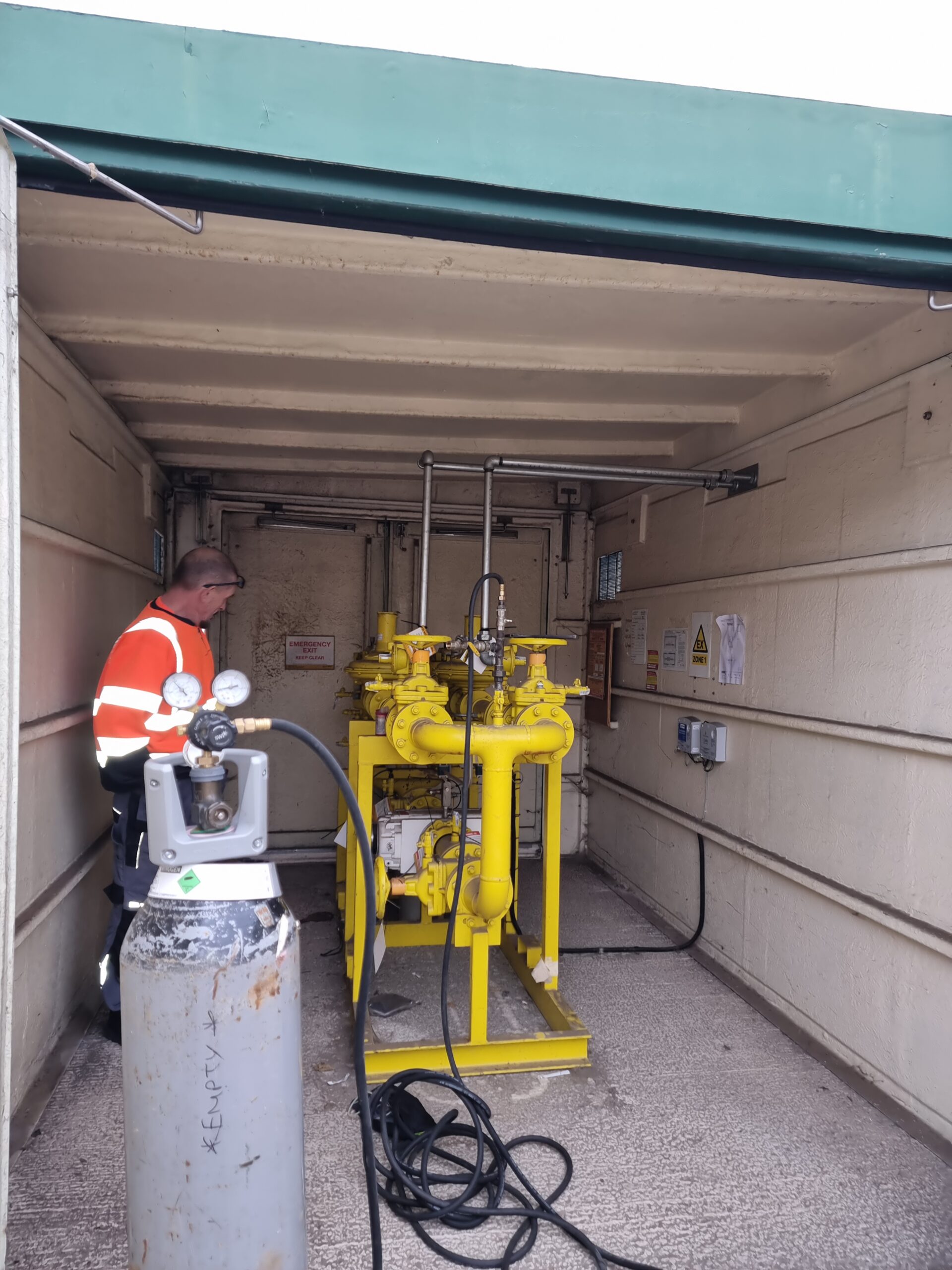
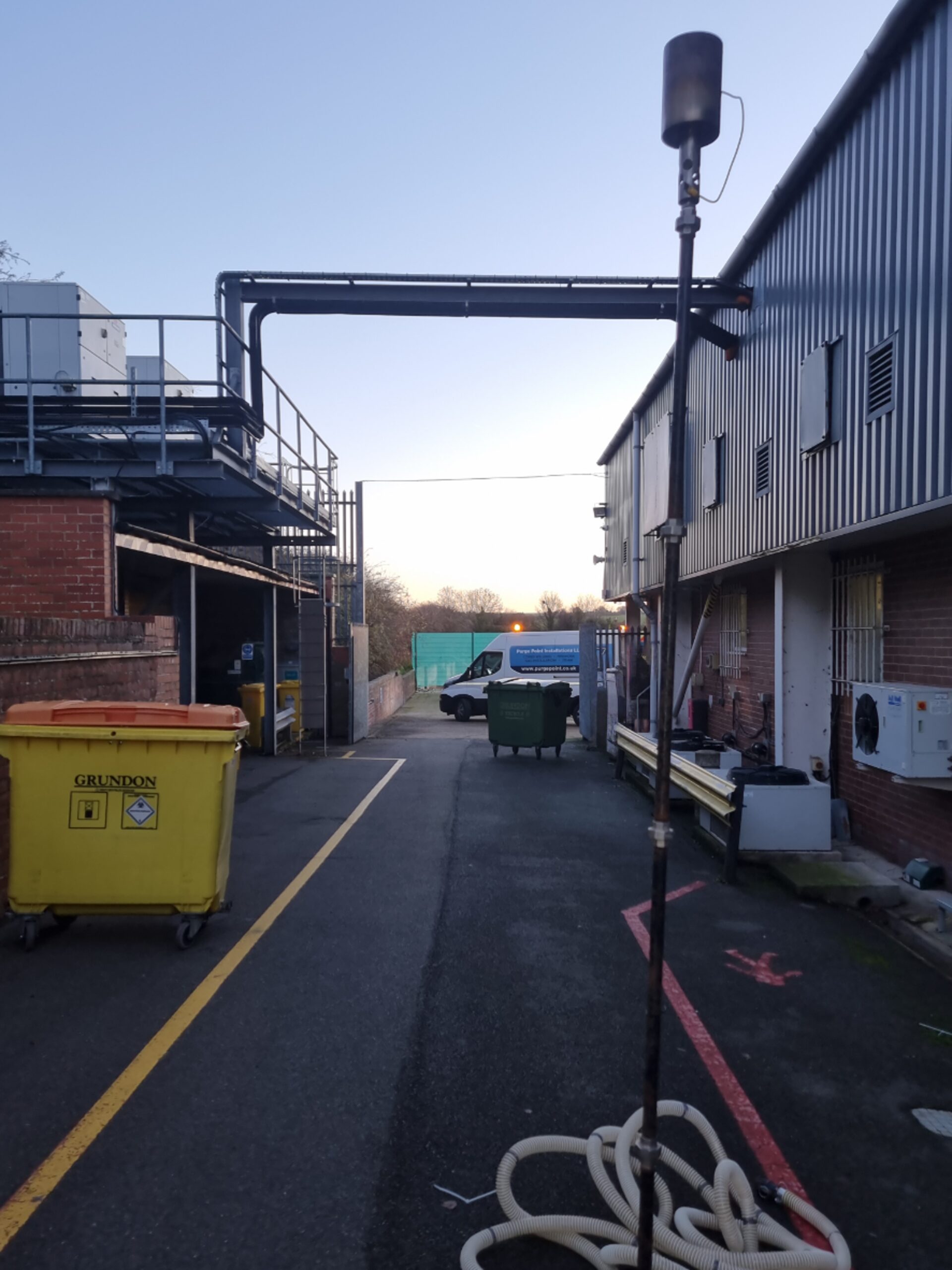
With Safety In Mind
Gas Safe Registered IGEM/UP/1
For decommissioning, it’s critical to remove all residual gas — especially before demolition or pipework alterations.
Safety is our highest priority when working with gas.
That’s why PurgePoint is a SafeContractor-approved and Gas Safe–registered company, backed by extensive industry experience. Our team maintains up-to-date safety training and certifications, including Fire Marshal and First Aid, to ensure every project is carried out to the highest standards of safety and complianceporibus consequuntur, vim ad prima vivendum.
Frequently asked questions
Gas purging is the controlled process of safely removing air from a gas pipework system and replacing it with natural gas — or vice versa — in order to prevent the formation of a hazardous air/gas mixture.
In the UK, natural gas purging is carried out in accordance with IGEM/UP/1, which is the recognised industry standard for the safe commissioning, decommissioning, and modification of gas pipework.
Purging completed by Purge Point Installations is to IGEM/UP/1 so we can work on any size installation and involves a planned and
All purging work must be carried out by competent, Gas Safe registered engineers, using appropriate equipment and safety controls.
Purging to IGEM/UP/1 involves a planned and calculated procedure, including:
- Determining the volume of pipework
- Selecting the correct purging method (air-to-gas or inert gas purging)
- Controlled introduction and venting of gas
- Continuous monitoring to ensure safe gas concentrations
- Testing and verification before the system is brought into service
Correct gas purging ensures:
- Safe commissioning / De-Commissioning of new, existing or altered pipework
- Prevention of explosive or unsafe gas/air mixtures
- Compliance with UK gas safety legislation and IGEM guidance
Choosing Air or Nitrogen for Gas Purging
When planning a gas purge in accordance with IGEM/UP/1, the choice between air or nitrogen depends on pipe size, purge velocity requirements, site conditions, and practicality.
Nitrogen Purging
Nitrogen Purging
Nitrogen is an inert gas and is commonly used where separation between air and natural gas is required. We do prefer a Nitrogen purge where practical. However, for larger diameter pipework, achieving the required QP purge velocity using nitrogen can be challenging.
To obtain sufficient flow rates in large mains, a high-pressure regulator is often required. In practice, this can introduce additional issues, including:
- Regulator diaphragm freezing due to rapid gas expansion
- Reduced or unstable flow rates
- Increased equipment complexity and cost
These factors can make nitrogen purging less practical on large installations unless suitable high-capacity equipment is used.
Air Purging
Air purging is often the more practical and cost-effective solution, particularly on larger diameter pipework where higher flow rates are required to achieve the correct purge velocity.
Air purging allows:
- Easier achievement of required QP velocities
- Reduced equipment complexity
- Lower overall cost compared to bottled gases
However, site conditions must be considered. In some locations, it may not be possible to position a compressor close enough to the purge point due to access restrictions or safety constraints.
Site Practicalities and Access
Where compressor access is restricted, bottled gases such as nitrogen can be transported directly to the purge location, making them advantageous in confined or restricted-access environments.
Summary
The selection of purge medium should always be based on:
- Pipe size and required purge velocity
- Ability to achieve and maintain stable flow rates
- Site access and logistical constraints
- Safety, compliance, and cost considerations
Each purge is assessed individually to ensure the chosen method complies with IGEM/UP/1 and is both safe and practical for the specific installation.
The duration of gas purging is determined by calculations carried out in accordance with IGEM/UP/1, which take into account the diameter and total length of the pipework to establish the system volume and required purge velocity.
Smaller or shorter pipe runs can typically be purged more quickly, whereas larger diameter or longer mains require additional time to safely achieve the calculated purge requirements.
Other factors such as the chosen purge method (air or nitrogen) and site conditions may also influence the overall duration. Each purge is assessed individually to ensure it is completed safely with a safety focused assessment to identify hazards are in full compliance with UK gas safety standards.
Why Purge Velocity Matters
Maintaining the correct purge velocity (QP) is essential. If velocity is too low, the purge gas may not mix correctly, leading to stratification — where inert gas flows over the top of the natural gas without fully clearing it. This results in an incomplete purge and a potential safety risk.
Our engineers calculate the correct purge rate for every system and confirm safe removal using calibrated Gasco Seeker detectors.

